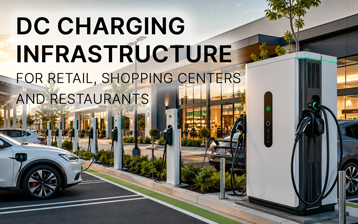
In the context of the energy transition, large retail chains, shopping centers, restaurants, and all businesses characterized by customer dwell times of one to two hours represent ideal locations for the installation of widespread public charging infrastructure.
Designing these solutions today requires an integrated approach capable of combining industrial power electronics, compact design, and smart software for managing available power, user authentication, and service billing. The goal is to make the most of customer dwell time through medium- and high-power direct current (DC) charging stations.
The main technologies available
At the hardware level, the market offers two major families of solutions.
On one hand, there are the leading manufacturers of power electronics and photovoltaic inverters, who have extended their industrial expertise to the development of high-efficiency DC charging stations. These systems integrate advanced conversion modules capable of operating in synergy with photovoltaic plants and C&I-sector BESS storage systems, including through direct current (DC) connections.
On the other hand, the market offers solutions developed by companies specializing in electric mobility, automation, and charging infrastructure management.
Centralized architectures and compact systems
The architectures currently available are mainly divided into two configurations.
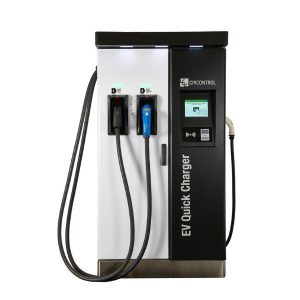
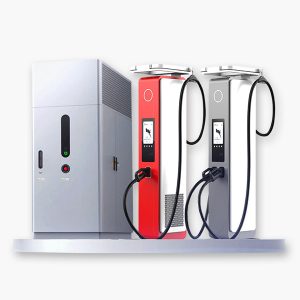
The first involves centralized power conversion through a single high- or very-high-power unit, capable of dynamically managing available energy and distributing it to satellite dispensers with a minimalist design. This solution optimizes use of space and preserves the aesthetics of commercial parking areas.
The most advanced manufacturers also incorporate large anti-vandal touchscreens, contactless credit card readers compliant with the latest European AFIR regulations, and LED lighting systems that allow the operating status of charging points to be identified at a glance.
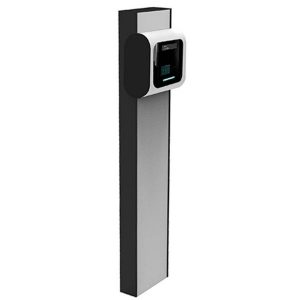
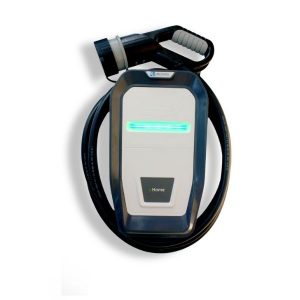
When available space is limited, the choice can shift toward compact, lightweight DC devices, drawing on experience gained in the residential and semi-public charging sector. These solutions offer refined aesthetics and high connectivity, and can be wall-mounted or installed on double-sided poles, minimizing visual impact.
Smart load balancing and interoperability
The real strategic element of a multi-point infrastructure lies in its dynamic load-balancing algorithms.
The integrated software continuously monitors the power available at the connection point and distributes it optimally among the various charging points, also taking into account the consumption of other loads present at the site.
When the building’s energy demand increases, the system automatically adjusts the power delivered without interrupting ongoing charging sessions, ensuring service continuity and maximum efficiency in the use of available resources.
The adoption of open, standardized communication protocols, such as OCPP and Modbus, also ensures full interoperability with payment platforms, apps from major electric mobility operators, and SCADA systems dedicated to managing the energy of the entire complex.
Users can thus start a charging session via QR code, corporate cards, dedicated apps, or loyalty programs linked to the businesses.
A strategic investment for the retail sector
Adopting DC charging infrastructure allows shopping centers, restaurants, and retail businesses to turn customer dwell time into an opportunity for added value.
The result is a modular, scalable infrastructure that integrates seamlessly with the building’s energy balance, capable of supporting the growth of electric mobility and generating new value-added services for customers.
-
Charging station, Circontrol, Energy Mobility
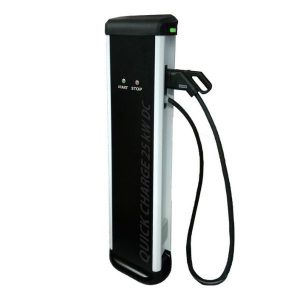
Circontrol DC eSpeed Basic post
The DC eSpeed Basic post is a DC charging station which can be installed for private application, where quick charge of vehicles is a must (for instance: car rentals, dealerships, private companies…).
Product features:
• Three phase system with single direct current output (DC) with a maximum power of 25kW
• Wide voltage range delivered from 150V to 950V
• Available with CCS Combo or CHAdeMO connector
• Start/Stop buttons
• RGB LEDSKU: n/a -
Charging station, Circontrol, Energy Mobility
Circontrol DC Raption 50-150
Raption is a range of extremely powerful DC charging stations, designed for installations in both public and private locations where electric vehicles have to be charged as fast as possible (less than 30 minutes).
Raption DC is available in the following versions:
- Raption 50 – 50kW DC
- Raption 150 – 150kW DC
Common features:
- OCPP Protocol 1.6 J
- Modem/Ethernet port
- RFID authentication
- Connector configuration available between CCS-CHAdeMO-Type 2 (on request)
SKU: n/a -
Accessories, Circontrol, Energy Mobility
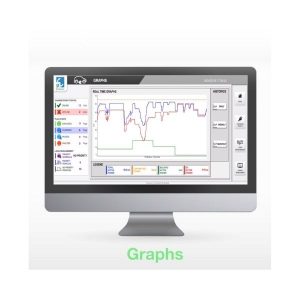
Circontrol DLM (Dynamic Load Management)
Dynamic Load Management (DLM) is a smart system devised by Circontrol for energy management of multiple charging stations that work at the same time, to avoid exceeding the available power.
DML features are:
- Restriction of the maximum power withdrawable from the grid
- Possibility to integrate OCPP
- All the stations charging status can be controlled via SCADA
- RFID authentication
- Building’s energy monitoring
SKU: n/a -
-
-
Circontrol, Energy Mobility, Wallbox
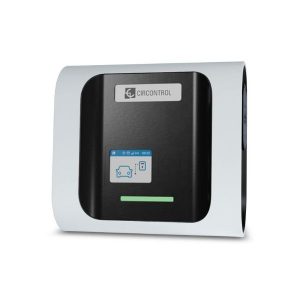
Circontrol wallbox eNext Elite S 7,4kW / T 22kW
Circontrol wallbox eNext Elite is a wallbox designed to be installed both inside and outside homes, condominiums, workplaces and public parking lots.
- Can be connected to a back-end system via ethernet, 3G/4G and Wi-Fi
- Highest level of protection thanks to integrated DC leakage detection and welding detection.
- RFID reader
- 3.5” color display
- OCPP 1.6J protocol
- Types available: eNext Elite S 7.4kW single-phase and eNext Elite T 22kW three-phase wallbox.
SKU: n/a -
Circontrol, Energy Mobility, Wallbox
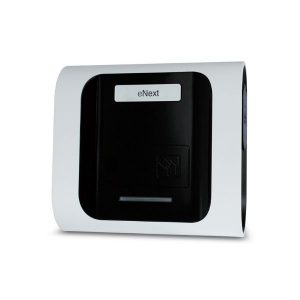
Circontrol wallbox eNext S/T
Wallbox eNext is conceived to be installed in private houses as well as in workplaces and private car parks.
This advanced system’s function is to charge electric cars and its goal is to facilitate the charging process.
- “Hi! Charger” App
- Bluetooth recognition
- DC protection 6 mA
- Can be integrated with BeON
- Versions with Type 2 sockets are equipped with safety shutters
Wallbox eNext is accessible in both single phase and three phase version:
- Wallbox eNext S (single phase)
- Wallbox eNext T (three phase)
SKU: n/a -
Energy Mobility, Fronius
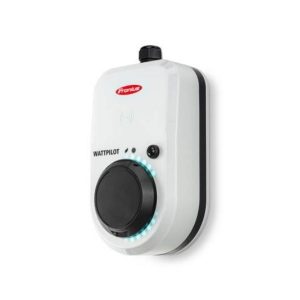
FRONIUS WATTPILOT GO 11 / 22 J
Fronius Wattpilot Go offers an intelligent and flexible charging solution, suitable for all electric cars, it also offers charging options suitable for different needs, oriented towards efficiency and convenience.
- 11 kW or 22 kW portable charging solution for home and travel use.
- Can be hung vertically indoors and outdoors, is removable and therefore portable.
- Available in two power classes.
SKU: n/a -
Energy Mobility, Huawei
Huawei FusionCharge DC – Ultra-fast, centralised EV charging
Huawei FusionCharge DC is designed for high-demand environments such as motorways, commercial car parks, corporate charging hubs and heavy-duty vehicle fleets. It combines high performance with an intelligent architecture that maximises energy efficiency while reducing noise levels at the charging points.
- Power Unit: available in two power ratings, 600 kW and 240 kW
- Liquid Cooled Dispenser: 425 kW rated power
- Boost Dispenser: 375 kW rated power
SKU: n/a -
Energy Mobility, Huawei, wallbox
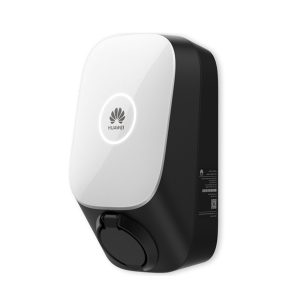
Huawei Smart Charger: SCharger-7KS-S0 – SCharger-22KT-S0
The Huawei Smart Charger represents a very versatile solution for charging electric vehicles.
- 4 kW single-phase or 22 kW three-phase
- Type 2 socket
- Recharge mode 3
- Authentication methods: RFID, Bluetooth, App
- Communication: WiFi, Ethernet
- OCPP 1.6 and Modbus TCP protocols
- Available: SCharger-7KS-S0 / SCharger-22KT-S0
SKU: n/a