


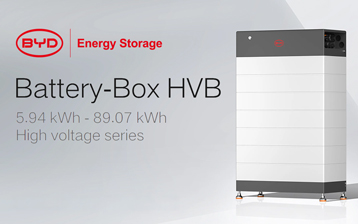
The BYD Battery-Box HVB is a high-voltage battery energy storage system designed for residential photovoltaic installations, offering modularity, high energy density and installation flexibility. Based on Lithium Iron Phosphate (LFP) chemistry and BYD Blade Battery technology, the HVB series supports storage configurations ranging from 5.94 kWh to 89.07 kWh through the integration of multiple battery modules and towers.
The system is designed for installers and system designers requiring scalable energy storage solutions capable of optimising self-consumption, improving load management and supporting backup functionality when paired with compatible inverters.
BYD Battery-Box HVB: LFP and Blade Battery Technology
The BYD Battery-Box HVB series uses Lithium Iron Phosphate (LiFePO4) cells, a technology characterised by high thermal stability, long service life and cobalt-free cell chemistry.
The integration of BYD’s proprietary Blade Battery technology, also developed for the automotive sector, optimises cell arrangement and space utilisation within each module, contributing to a compact and robust design.
The main advantages of this technology include:
- High thermal and chemical stability of LFP cells.
- Architecture designed to optimise energy density.
- Compact and robust mechanical construction.
- Battery technology suitable for frequent charging and discharging cycles.
These features make the HVB series an attractive solution for photovoltaic installations requiring reliability, safety and operational continuity.
Modular Storage Capacity from 5.94 to 89.07 kWh
One of the key strengths of the BYD Battery-Box HVB is its modular tower architecture, allowing the system to be sized according to the energy requirements of each installation.
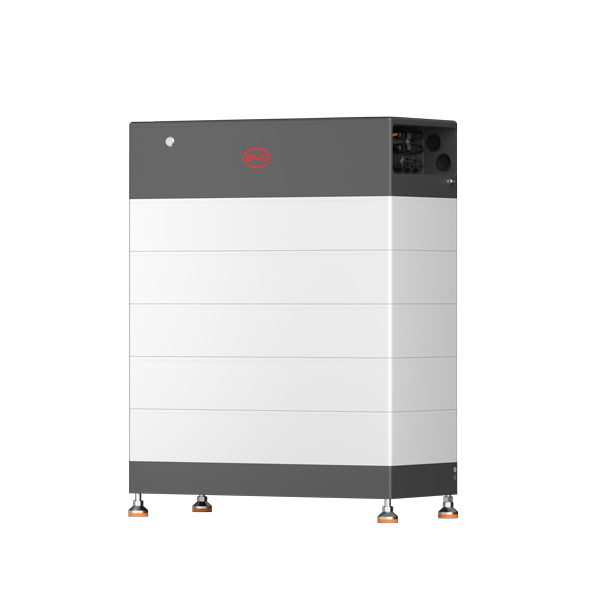
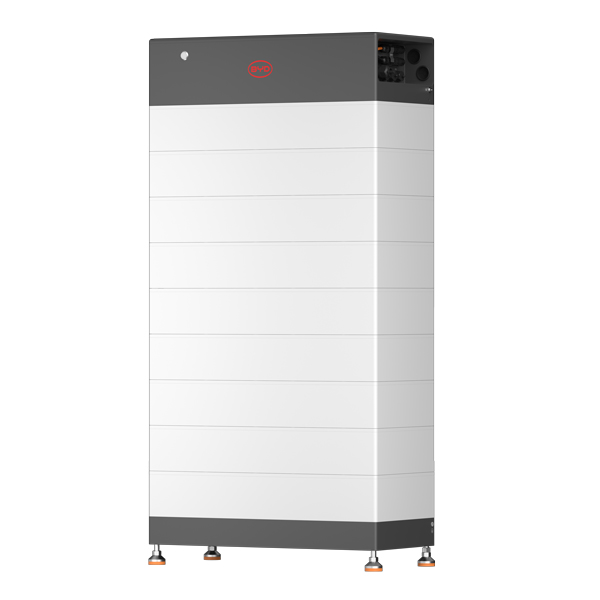
Each battery module has a nominal capacity of 2.97 kWh. A single battery tower can accommodate between 2 and 10 modules, providing a maximum storage capacity of approximately 29.7 kWh.
For installations requiring greater energy storage capacity, up to three battery towers can be connected in parallel, achieving a maximum total capacity of 89.07 kWh.
This modular design enables tailored storage solutions for both new photovoltaic installations and the expansion of existing systems, in accordance with the configurations supported by the manufacturer.
Simplified Installation and Plug-and-Play Design
The BYD Battery-Box HVB features a stackable modular structure designed to simplify assembly and minimise electrical connections between battery modules.
The system incorporates integrated connectors, allowing battery towers to be assembled by stacking individual modules without the need for external inter-module cabling.
Its compact design facilitates installation in plant rooms, garages and other suitable locations, subject to the manufacturer’s installation requirements.
For installers, the plug-and-play architecture offers several advantages:
- Reduced cabling between battery modules.
- Simplified assembly procedures.
- Greater flexibility in system configuration.
- Modular construction that facilitates handling and installation.
These features help streamline installation procedures and the integration of battery storage into photovoltaic systems.
BYD Battery-Box HVB: Performance and Energy Efficiency
The BYD Battery-Box HVB uses a high-voltage architecture designed to optimise energy transfer between the battery storage system and the hybrid inverter.
The technology enables efficient management of charging and discharging cycles, with a declared round-trip efficiency of at least 95%, helping to maximise the utilisation of electricity generated by the photovoltaic system.
Thanks to its modular architecture and the ability to connect multiple battery towers in parallel, the system can be sized according to the energy requirements of the installation, providing flexibility for both new installations and future capacity expansions.
Actual system performance depends on the battery configuration and the specifications of the connected inverter.
Intelligent Battery Management and Monitoring
The BYD Battery-Box HVB series incorporates a Battery Management System (BMS) and an upper control unit designed to monitor key operating parameters and coordinate battery module management.
Key functions include:
- Monitoring of State of Charge (SOC) and operating parameters.
- Battery module management and control.
- Communication with compatible hybrid inverters.
- Diagnostic functions and software updates, depending on the system configuration.
The electronic management system helps optimise battery operation and supports system inspection, monitoring and maintenance activities.
Safety, IP55 Protection and Certifications
The BYD Battery-Box HVB is designed to meet the safety requirements applicable to electrochemical energy storage systems.
LFP technology contributes to cell thermal stability, while the system architecture incorporates integrated monitoring and protection devices.
The main standards and certifications declared for the series include:
- IEC 62619, covering safety requirements for lithium batteries used in industrial applications.
- UN 38.3, specifying the tests required for the transport of lithium batteries.
- VDE 2510-50, covering safety requirements for stationary energy storage systems.
- CE marking, in accordance with applicable European requirements.
The IP55 ingress protection rating provides protection against dust and water jets, offering greater flexibility when selecting an installation location.
The system is designed to operate under various environmental conditions, subject to the temperature limits and installation requirements specified in the manufacturer’s technical documentation.
Compatibility with Hybrid Inverters and Backup Applications
The BYD Battery-Box HVB is designed for integration with compatible hybrid inverters, enabling the management of electricity generated by the photovoltaic system and stored in the battery.
The main applications include:
- Optimisation of photovoltaic self-consumption.
- Storage of surplus electricity generated during peak solar irradiation hours.
- Supply of electrical loads during evening and night-time hours.
- Management of electricity consumption and peak power demand.
- Backup power supply during grid outages, where supported by the inverter and system configuration.
Compatibility must be verified against the official BYD inverter compatibility lists, taking into account the inverter model, firmware version and battery configuration.
BYD Battery-Box HVB: Flexible and Scalable Solar Battery Storage
Combining LFP chemistry, Blade Battery technology and a modular high-voltage architecture, the BYD Battery-Box HVB provides a flexible energy storage solution that can be sized according to the energy requirements of each installation.
With storage configurations ranging from 5.94 to 89.07 kWh, a plug-and-play modular design and intelligent battery management features, the system offers installers and system designers a versatile solution for residential photovoltaic applications with varying energy demands.
VP Solar supports photovoltaic professionals in selecting BYD battery storage solutions and identifying the most suitable configuration for each installation.
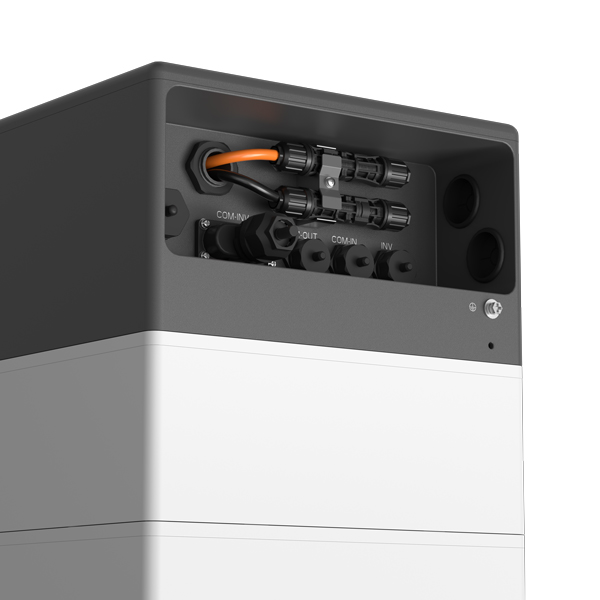
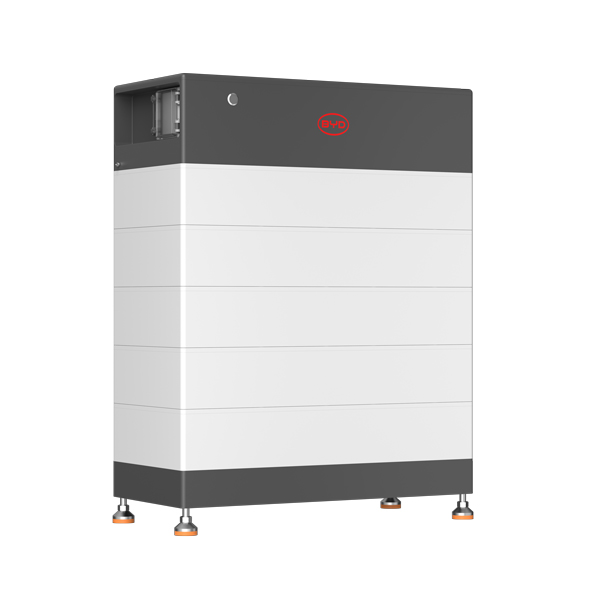
BYD Battery-Box HVB – high voltage – 5.94 to 29.69 kWh, maximum total capacity of 89.07 kWh
The BYD Battery-Box HVB is a high-voltage battery energy storage system featuring Lithium Iron Phosphate (LFP) chemistry and BYD Blade Battery technology, designed for residential photovoltaic installations. Its modular architecture allows storage capacity to be configured according to the energy requirements of each installation.
- Modular capacity from 5.94 to 89.07 kWh, with configurations ranging from 2 to 10 modules per tower and up to 3 towers connected in parallel
- BYD Blade Battery LFP technology, cobalt-free, offering high thermal stability and energy density
- Plug-and-play installation, with stackable modules and integrated connections, eliminating the need for inter-module cabling
- High-voltage architecture, with a declared round-trip efficiency of ≥95% and integration with compatible hybrid inverters
Datasheet English
Complete documentation
The BYD Battery-Box HVB is a modular high-voltage battery energy storage system for photovoltaic applications, featuring Lithium Iron Phosphate (LiFePO4) cells with BYD Blade Battery technology and a cell-to-pack architecture.
The system consists of 2.97 kWh battery modules, which can be connected in series in configurations ranging from 2 to 10 modules per tower, providing a usable capacity of 5.94 to 29.69 kWh. Up to three towers can be connected in parallel, achieving a maximum total storage capacity of 89.07 kWh.
Electrical Characteristics
The nominal voltage ranges from 102.4 V to 512 V, depending on the number of installed modules, with an overall operating voltage range of 80 V to 576 V, depending on the configuration.
The system offers the following specifications:
- Maximum output current: 50 A.
- Peak current: 98 A for 15 seconds.
- Round-trip efficiency: ≥95%.
- Inverter communication via CAN/RS485.
- Applications: on-grid, on-grid with backup and off-grid, when paired with compatible inverters.
Installation and Battery Management
The modular design with integrated plug-and-play connections simplifies assembly and reduces inter-module cabling. The system is designed for floor-mounted installation and supports future capacity expansion in accordance with the manufacturer’s guidelines.
Intelligent battery management features include automatic State of Charge (SOC) calibration, remote diagnostics and Over-the-Air (OTA) firmware updates. The BYD Smart Wi-Fi/LAN connectivity module is available as an optional accessory.
Dimensions, Protection and Safety
Each battery module weighs 27.3 kg. Overall tower dimensions vary depending on the configuration, from 479 × 610 × 282 mm with two modules to 1,327 × 610 × 282 mm with ten modules.
The battery features an IP55 protection rating and an operating temperature range from -20°C to +50°C, with possible performance derating at lower temperatures.
The BYD Battery-Box HVB series is declared compliant with IEC 62619, VDE 2510-50, UN 38.3 and applicable CE requirements. It is covered by a 15-year manufacturer’s warranty, subject to the applicable warranty terms and conditions.
Related products
-
Storage Battery, Huawei
Huawei LUNA2000 – smart string battery – 5/10/15 kWh
Lithium batteries for photovoltaic storage. Modular system with 5 kWh stackable battery packs with 100% discharge capacity.
- Modular design of 5kWh, 10 kWh and 15 kWh and parallelable up to 2 systems for a total of 30 kWh
- 10 year guarantee
- Configurable with Huawei Hybrid Single and Three Phase Inverters
SKU: n/a -
Storage Battery, BESS, SolarEdge
SolarEdge CSS-OD 197: CSS-OU-20 / PCS050 – All-in-One Cabinet for C&I Systems
 Storage Battery, BESS, SolarEdge
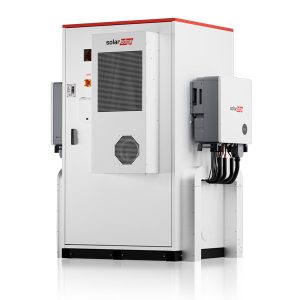
SolarEdge CSS-OD 197: CSS-OU-20 / PCS050 – All-in-One Cabinet for C&I Systems
The SolarEdge CSS-OD 197 is the ideal solution for those looking for a compact, safe and easy-to-install storage system, capable of increasing energy self-sufficiency and reducing grid consumption. Thanks to the SolarEdge ONE EMS, it is possible to manage the stored energy in every use case.
- Total storage capacity: 102.4 kWh
- Maximum charge/discharge power: 50 kW
- Pre-configured inverter and batteries for quick installation.
- Integrated fire protection system
- IP65 protection rating
SKU: n/a -
Storage Battery, Huawei
Huawei LUNA2000-5/7/14/21-S1
Storage system with 6.9 kWh LFP cells, modular solution with the possibility of stacking up to three battery packs per tower with a maximum capacity of 20.7 kWh parallelable up to 4 towers for a total of 82.8 kWh.
Huawei inverter compatible batteries:
- SUN2000-12/15/17/20/25K-MB0
- SUN2000-3/4/5/6/8/10KTL-M1
- SUN2000-2/3/3.68/4/4.6/5/6KTL-L1
SKU: n/a -
Storage Battery, ZCS Azzurro
ZCS Azzurro: LV ZSX5000 PRO battery – low voltage – from 4,6 to 18,4 kWh
 Storage Battery, ZCS Azzurro
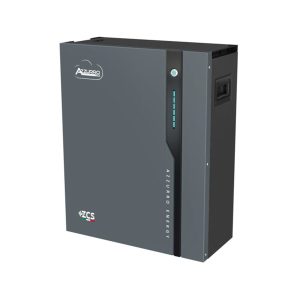
ZCS Azzurro: LV ZSX5000 PRO battery – low voltage – from 4,6 to 18,4 kWh
The ZSX5000 PRO LV battery modules are an energy storage unit for residential applications, combined with ZCS single-phase inverters.
- LFP technology
- Total net capacity (single module): 4,6 kWh
- Nominal voltage (single module): 51,2 V
- Maximum charge and discharge current: 100 A
- 10-year warranty
SKU: n/a


