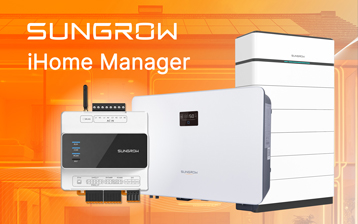
Smart energy management is becoming increasingly important for improving the financial performance of residential solar PV systems. The integrated Sungrow iHomeManager solution, combined with SH RS hybrid inverters and SBH batteries, enables coordinated management of solar PV generation, battery storage and household energy consumption, optimising energy usage according to homeowners’ requirements and electricity tariff structures.
Among its available features, Time Plan allows users to schedule battery charging and discharging cycles, enabling energy to be stored during periods when electricity has a lower market value and used or exported to the grid when financial conditions are more favourable.
Sungrow iHomeManager: an integrated solution for residential solar PV systems
Sungrow’s residential solution combines several components within a single energy management ecosystem:
- Sungrow iHomeManager: a Home Energy Management System (HEMS) that coordinates solar PV generation, battery storage and household energy consumption.
- Sungrow SH RS Hybrid Inverters: hybrid inverters designed for residential solar PV installations and integration with battery energy storage systems.
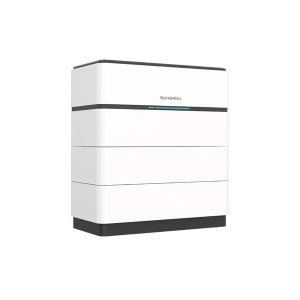
- Sungrow SBH Batteries: high-voltage battery storage systems featuring lithium iron phosphate (LFP) technology, available in configurations ranging from 10 to 40 kWh.
- iSolarCloud: a monitoring and management platform providing access to key energy performance data and system operating modes.
The integration of these devices enables effective management of household energy flows, increased self-consumption and scheduled use of stored electricity.
iHomeManager also supports the integration of additional devices, including electric vehicle charging systems and heat pumps, extending the possibilities for intelligent home energy management.
Sungrow time plan: how scheduled battery storage management works
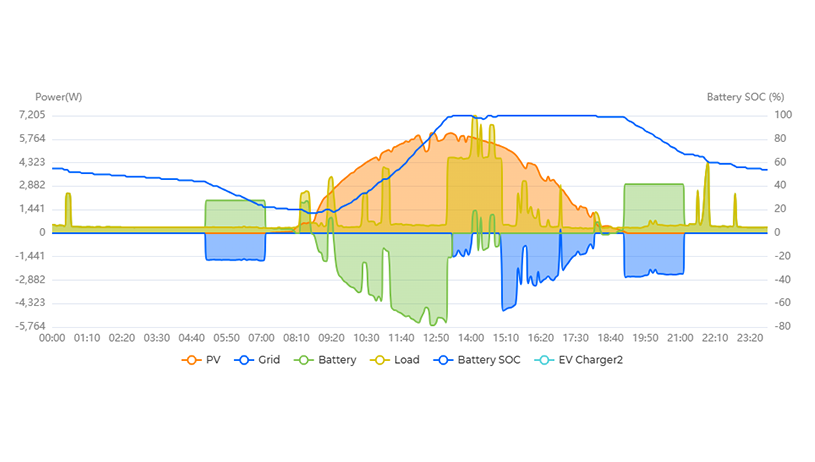
The Time Plan feature of Sungrow iHomeManager allows users to define specific battery charging and discharging periods according to electricity prices and system requirements.
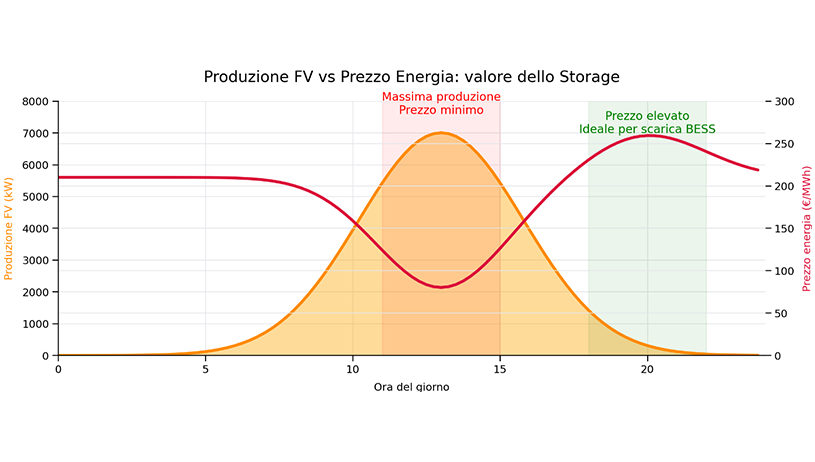
In conventional solar PV installations, electricity generated but not consumed on site is generally exported to the grid as it becomes available. However, during the middle of the day, when solar generation is typically highest, the value of exported electricity may be lower than during other periods.
Time Plan enables an alternative energy management strategy:
- Storing surplus solar energy: excess PV generation is stored in the battery rather than immediately exported to the grid.
- Scheduling battery discharge: specific time periods are defined for using the stored electricity.
- Optimising grid export: where permitted by the system configuration and contractual arrangements, stored energy can be exported during periods offering more favourable financial returns.
This scheduling capability allows solar energy consumption and export to be shifted to different times of day, with the aim of improving the overall financial benefits of the installation.
Configuring time periods and battery state of charge
The energy management system allows installers to configure several operating parameters, including:
- Scheduled battery charging and discharging periods.
- Charging and discharging power settings.
- Target battery State of Charge (SOC) levels.
- Different operating schedules according to the month and day of the week.
This flexibility enables installers to adapt battery storage operation to the technical characteristics of the installation and the household’s energy consumption profile.
Solar Battery Storage and Dynamic Electricity Tariffs: Optimising Energy Value
Advances in residential battery storage technology are creating new opportunities for improving the financial management of electricity.
Beyond increasing self-consumption, battery storage systems can help optimise the value of solar electricity through charging and discharging strategies based on time-of-use electricity tariffs.
In this context, Sungrow iHomeManager offers different energy management modes:
- Self-consumption: prioritises the use of solar PV electricity to supply household loads and charge the battery.
- Time Plan: enables manual scheduling of battery charging and discharging periods according to electricity tariff conditions.
- AI Mode: uses solar generation forecasts, consumption profiles and electricity tariff information to automatically optimise energy management.
Time Plan is particularly beneficial when significant price differences exist between electricity tariff periods.
However, the actual financial benefits depend on several factors, including the electricity supply contract, export remuneration arrangements, battery storage efficiency and the battery’s operating limitations.
Benefits of Sungrow iHomeManager for installers
For solar PV professionals, integrating a Home Energy Management System (HEMS) provides an opportunity to offer residential solutions that go beyond electricity generation and storage.
Key benefits include:
- Integrated system management: inverters, batteries and other energy devices communicate within a coordinated ecosystem.
- Energy optimisation: battery charging and discharging cycles can be adapted to consumption patterns and electricity tariff conditions.
- Greater system design flexibility: support for configurations incorporating additional inverters, EV chargers and heat pumps, subject to device compatibility.
- Centralised monitoring: energy performance can be monitored and managed through the iSolarCloud platform.
- System expandability: additional components can be integrated to accommodate changing household energy requirements.
During the system design phase, installers and designers should carefully assess battery sizing, solar generation and consumption profiles, device compatibility, and the technical and contractual requirements governing electricity export to the grid.
Sungrow: an integrated solution for smart residential solar PV
The integration of Sungrow iHomeManager, SH RS hybrid inverters and SBH battery storage systems enables the development of residential solar PV installations with advanced energy management capabilities.
With Time Plan, battery storage is no longer used solely to increase self-consumption. It can also become a valuable tool for scheduling energy usage and optimising the financial value of solar electricity.
For installers and system designers, these capabilities are important considerations when selecting residential solar PV solutions designed to support increasingly flexible and intelligent energy management.
-
Storage Battery, Sungrow
Sungrow SBH 100-400 – HV battery
Sungrow SBH100-400 represents a reliable and versatile energy storage solution, combining high power, advanced safety and modular flexibility.
- Single module capacity: 5 kWh
- LFP batteries
- Stackable system (up to 8 modules in parallel)
- IP55
- 10-year warranty
SKU: n/a -
Hybrid inverter, Inverter, Photovoltaic inverter, Residential inverter Sungrow, Sungrow, Sungrow
Sungrow SH 3.0/3.6/4.0/5.0/6.0 RS – single-phase
 Hybrid inverter, Inverter, Photovoltaic inverter, Residential inverter Sungrow, Sungrow, Sungrow
Sungrow SH 3.0/3.6/4.0/5.0/6.0 RS – single-phase
This Sungrow residential single-phase hybrid inverter with backup function is the perfect solution for both retrofitting and new installations. Sold with a 10-year warranty.
- 2 MPPT
- IP65
- LED display
- AC side plug and play connector
- WLAN, Ethernet
- Available models: SH3.0RS, SH3.6RS, SH4.0RS, SH5.0RS, SH6.0RS.
SKU: n/a